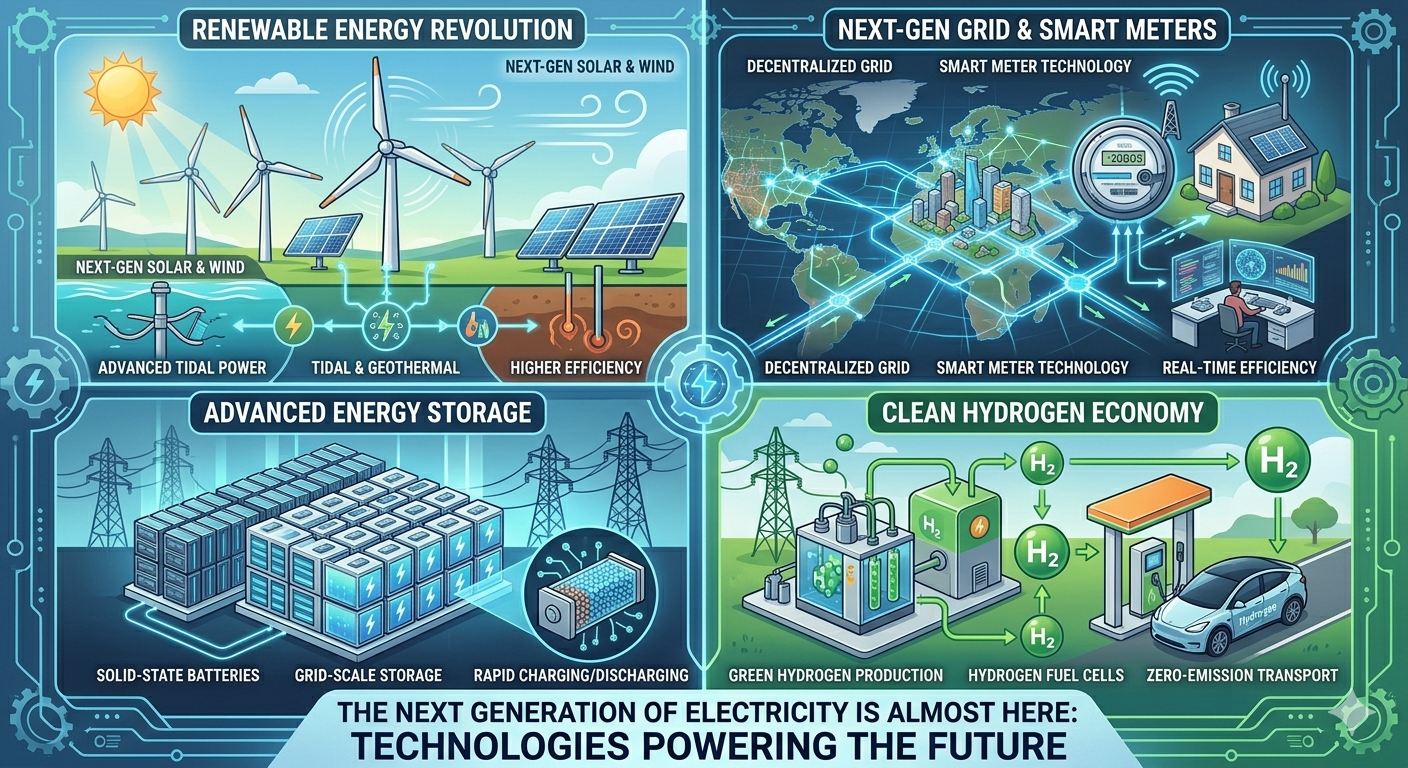
The global energy landscape is on the brink of a historic transformation. As the world accelerates toward decarbonization and electrification, the demand for clean, reliable, and scalable electricity is rising at an unprecedented pace. By 2050, global electricity demand is expected to nearly triple, driven by the electrification of transportation, industrial systems, and urban infrastructure.
This surge in demand is not just about producing more electricity—it’s about producing it smarter, cleaner, and more efficiently. From advanced geothermal systems to nuclear fusion and geologic hydrogen, the next generation of electricity is already taking shape.
A Global Shift Toward Clean Electricity
There’s a lot on the agenda this week, but one of the most exciting developments is the rapid evolution of electricity generation technologies. The world is moving away from fossil fuels and embracing renewable and alternative energy sources at a record pace.
In fact, wind and solar energy are now generating more electricity than fossil fuels in parts of Europe—a milestone that highlights a significant shift in the global energy mix. This transition signals a future where electricity systems are more diverse, innovative, and resilient.
However, renewable energy alone may not be enough to meet future demand. To truly decarbonize the global economy, we need breakthrough technologies capable of delivering massive amounts of energy consistently and affordably.
Why the Future Needs More Electricity
The push toward electrification is transforming multiple sectors:
- Transportation: Electric vehicles replacing gasoline-powered cars
- Industry: Electrified manufacturing processes
- Buildings: Smart, energy-efficient infrastructure
- Digital Economy: Data centers and AI systems consuming more power
As these sectors evolve, the pressure on electricity systems continues to grow. This is where next-generation energy technologies come into play.
Breakthrough Technologies Shaping the Future of Electricity
1. Advanced Geothermal Energy
Geothermal energy has been around for over a century, but recent innovations are unlocking its full potential.
Traditionally, geothermal power plants are located near tectonic plate boundaries, where heat from the Earth’s core is easily accessible. However, new drilling techniques are changing that.
Companies like Fervo Energy are pioneering enhanced geothermal systems that:
- Drill up to 15,000 feet deep
- Extend wells horizontally
- Access heat in previously unreachable locations
Their pilot projects have already demonstrated consistent electricity generation since 2023, and large-scale plants are expected to come online soon.
👉 Why it matters: Geothermal energy provides 24/7 clean power, unlike solar or wind, making it a reliable backbone for future energy systems.
2. Nuclear Fusion: Power of the Stars
Fusion energy represents one of the most exciting frontiers in clean electricity generation. It is the same process that powers the sun and has the potential to deliver virtually limitless energy.
Unlike traditional nuclear power (fission), fusion:
- Produces no carbon emissions
- Generates minimal waste
- Has no meltdown risk
Several companies are racing to commercialize fusion technology:
- Commonwealth Fusion Systems
- Type One Energy
- Zap Energy
Two main approaches dominate the field:
🔵 Tokamak
- Donut-shaped reactor
- Easier to build
- Harder to stabilize
🟣 Stellarator
- Twisted design
- More stable
- Complex to engineer
👉 Future Outlook: Commercial fusion power plants could become a reality within the next decade, revolutionizing global energy production.
3. Geologic Hydrogen: A Hidden Energy Treasure
One of the most surprising energy discoveries in recent years is geologic hydrogen—naturally occurring hydrogen generated within the Earth.
Unlike traditional hydrogen production, which often relies on fossil fuels, geologic hydrogen:
- Is naturally produced underground
- Emits zero carbon
- Can be continuously replenished
A small village in Mali is already powered by natural hydrogen reserves beneath its surface. Researchers have also identified deposits in the U.S. and Europe.
Emerging companies like Koloma are exploring ways to tap into this resource.
👉 Challenge: The biggest hurdle is locating large, economically viable deposits.
👉 Opportunity: Once one major source is identified, scaling production could accelerate rapidly.
The Role of Renewable Energy
While breakthrough technologies are advancing, renewable energy remains a cornerstone of the energy transition.
Wind & Solar Growth
Wind and solar are:
- Becoming more cost-effective
- Scaling rapidly worldwide
- Reducing dependence on fossil fuels
The European Union’s recent milestone—where renewables surpassed fossil fuels—demonstrates how quickly the energy transition is happening.
Innovation Driving the Energy Revolution
The future of electricity is not just about new energy sources—it’s also about smarter systems.
🔹 Smart Grids
Enable efficient energy distribution and real-time monitoring
🔹 Energy Storage
Battery technologies ensure consistent power supply
AI & Data Analytics
Optimize energy consumption and grid performance
These innovations are making electricity systems more adaptive, resilient, and efficient.
Challenges Ahead
Despite rapid progress, several challenges remain:
High Costs
Emerging technologies like fusion require significant investment
Technical Complexity
Scaling new energy systems is difficult
Infrastructure Limitations
Existing grids need upgrades to support new technologies
Future Outlook: What Lies Ahead?
If current progress continues, the next few decades could redefine how the world generates and consumes electricity.
🌟 What We Can Expect:
- At least one breakthrough technology becoming mainstream
- Greater reliance on clean and renewable energy
- Electrification of nearly all major industries
- Reduced global carbon emissions
The combination of geothermal, fusion, and geologic hydrogen could provide the energy diversity needed to meet future demand.
The next generation of electricity is closer than ever. With groundbreaking innovations in geothermal energy, nuclear fusion, and geologic hydrogen, the world is moving toward a future powered by clean, reliable, and scalable energy.
As demand continues to rise, these technologies will play a crucial role in shaping a sustainable energy future. While challenges remain, the progress being made today offers a glimpse of a world where electricity is abundant, affordable, and environmentally friendly.
The future of energy isn’t just evolving—it’s accelerating.
Leave a Reply