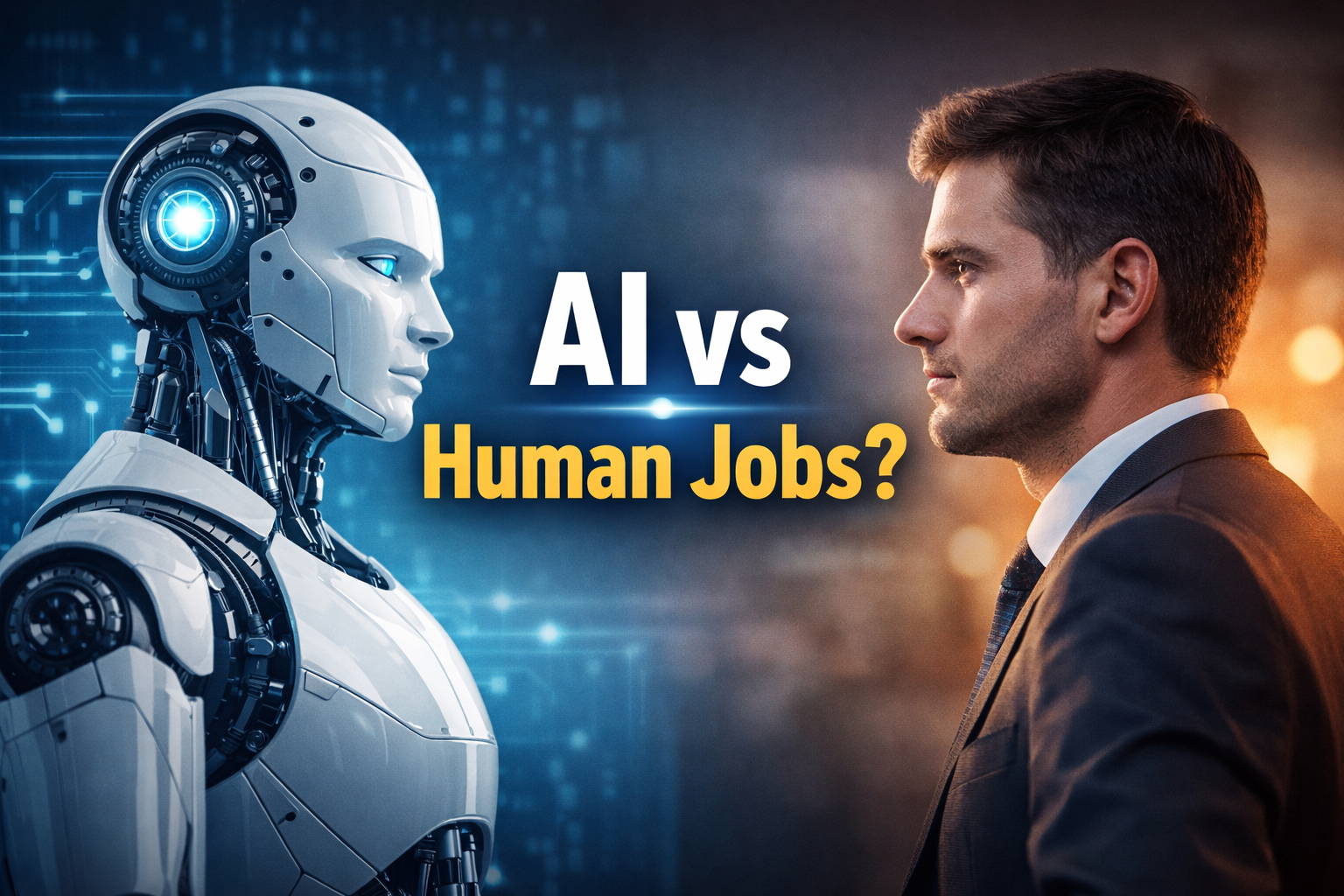
AI vs Human Jobs
The rapid rise of artificial intelligence (AI) is transforming the global workforce at an unprecedented pace. From automation in manufacturing to AI-powered decision-making in business, technology is reshaping how work is performed across industries. This shift has sparked an ongoing debate: Will AI replace human jobs, or will it create new opportunities?
As we move deeper into 2026, the answer lies somewhere in between. AI is not just replacing jobs—it is redefining them.
The Rise of AI in the Workplace
Artificial intelligence has evolved from simple automation tools to advanced systems capable of learning, reasoning, and decision-making. Businesses are increasingly adopting AI to:
- Improve efficiency
- Reduce operational costs
- Enhance productivity
- Enable data-driven decision-making
Industries such as healthcare, finance, manufacturing, and retail are leading this transformation, integrating AI into everyday operations.
AI vs Human Jobs: The Reality
Jobs Being Replaced by AI
AI is particularly effective at handling repetitive and predictable tasks. Roles that involve structured processes are more likely to be automated.
Examples:
- Data entry and administrative roles
- Customer support (chatbots)
- Manufacturing and assembly line jobs
- Basic accounting and bookkeeping
Automation in these areas helps businesses reduce costs and improve accuracy.
Jobs Being Created by AI
While AI eliminates certain roles, it is also creating entirely new job categories that didn’t exist a decade ago.
Emerging Roles:
- AI engineers and data scientists
- Machine learning specialists
- AI ethics consultants
- Automation strategists
- Cybersecurity analysts
These roles require advanced technical skills and are in high demand globally.
The Shift Toward Hybrid Jobs
One of the most important workforce trends is the rise of hybrid roles, where humans work alongside AI systems.
Instead of full replacement, AI is:
- Assisting professionals in decision-making
- Enhancing productivity
- Automating routine tasks
Example:
Doctors use AI for diagnosis support, while marketers use AI tools for data analysis and campaign optimization.
👉 The future workforce will be defined by human + AI collaboration, not competition.
Key Workforce Trends in 2026
Skill Transformation is Essential
The demand for digital and analytical skills is increasing rapidly. Employees must adapt by learning:
- AI and data analytics
- Digital tools and platforms
- Critical thinking and problem-solving
Reskilling & Upskilling Become Critical
Companies are investing in workforce training to prepare employees for AI-driven environments.
👉 Lifelong learning is becoming a necessity rather than an option.
Rise of Remote & Digital Work
AI-powered tools are enabling remote work and global collaboration, breaking geographical barriers.
Increased Demand for Human-Centric Skills
While AI excels at automation, it cannot replicate:
- Creativity
- Emotional intelligence
- Leadership
- Strategic thinking
These human skills will become even more valuable.
Gig Economy Expansion
AI platforms are supporting freelance and gig-based work, offering flexible employment opportunities.
Industry-Wise Impact of AI
Manufacturing
Automation and robotics are reducing manual labor but increasing demand for technical roles.
Healthcare
AI assists in diagnostics, but human expertise remains essential for patient care.
Finance
AI is automating transactions and fraud detection, while professionals focus on strategy and advisory roles.
Retail
AI improves customer experience through personalization, while humans handle relationship management.
Challenges & Concerns
Job Displacement Risks
Workers in low-skill roles face higher risks of job loss due to automation.
Skill Gap
There is a growing gap between available jobs and the skills required to perform them.
Ethical Concerns
AI bias, transparency, and accountability remain critical issues.
Economic Inequality
AI adoption could widen income inequality if not managed properly.
Future Outlook: What Lies Ahead?
The future of work will not be about AI replacing humans—it will be about AI augmenting human capabilities.
Key Predictions:
- Humans and AI will work together in most industries
- New job roles will continue to emerge
- Automation will handle repetitive tasks
- Human creativity and innovation will drive growth
The debate between AI and human jobs is not about competition—it’s about evolution. AI is transforming the workforce, but it is also creating new opportunities for those who are willing to adapt.
To stay relevant in the future job market, individuals and organizations must embrace change, invest in skills, and leverage AI as a tool for growth.
The future belongs to those who can work with AI, not against it.
Leave a Reply