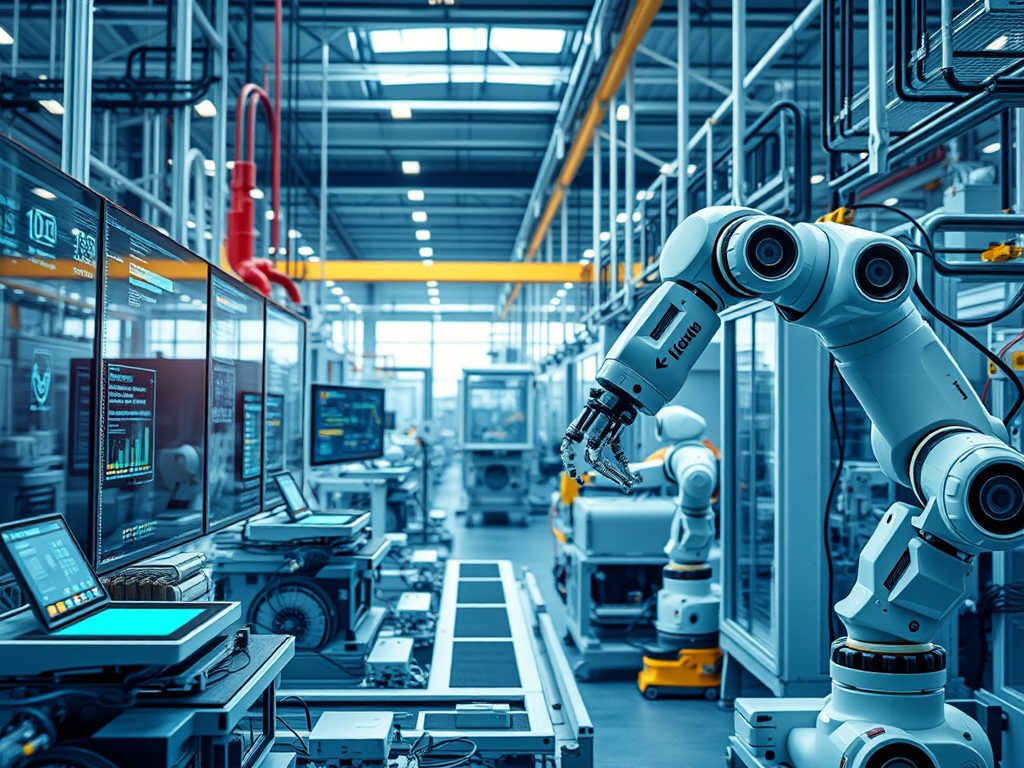
The industry 4.0 market is accelerating a new era of digital transformation, where smart factories, intelligent machines, and cyber-physical systems reshape how industries operate. As automation merges with real-time data, advanced robotics, cloud infrastructure, and AI-driven insights, enterprises worldwide are rapidly adopting Industry 4.0 technologies to enhance productivity, reduce operational inefficiencies, and increase decision-making accuracy. This shift marks one of the most significant industrial revolutions in modern history.
Reimagining the Future of Smart Manufacturing
Industry 4.0 integrates robotics, IoT sensors, machine learning, and advanced analytics to enable fully connected factory ecosystems. From predictive maintenance and digital twins to automated workflows and smart quality control, every component works together to deliver operational excellence. Manufacturers gain visibility across the supply chain, enabling faster responses to market demand, equipment failures, or material shortages.
As industrial automation scales, companies are exploring new pathways to sustainability by optimizing energy consumption, reducing production waste, and improving resource allocation through data-driven insights.
Key Drivers Fueling Market Growth
Several transformative trends are propelling the growth of Industry 4.0 adoption worldwide:
1. Rise of Industrial IoT (IIoT)- Networks of sensors and connected systems provide real-time monitoring, reducing downtime and ensuring seamless production.
2. Adoption of Digital Twins- Digital replicas allow engineers to simulate, analyze, and optimize factory operations without interrupting real-world production.
3. AI & Machine Learning Integration- Smart algorithms enhance forecasting accuracy, predictive analytics, materials planning, and autonomous decision-making.
4. Robotics & Smart Automation- Collaborative robots (cobots) and autonomous systems streamline repetitive tasks, enhance worker safety, and reduce labor-intensive processes.
5. Cloud & Edge Computing- Scalable computing infrastructure supports faster data processing and improved operational control across distributed facilities.
Impact on Manufacturing and Enterprise Operations
Organizations adopting Industry 4.0 experience dramatic improvements in efficiency, cost optimization, and product customization. Real-time analytics help manufacturers detect defects early, optimize workflows, and maintain higher production standards. Moreover, cloud-based industrial platforms offer seamless integration of equipment, supply chain, and workforce management.
This digital evolution also supports downstream industries. For example, technology advancements complement emerging domains such as the largest third party claims administrators, which increasingly rely on automated systems, AI, and data-driven platforms for streamlined operations. Similarly, data intelligence methodologies used in Industry 4.0 align with innovations found in the precision agriculture market, where smart sensors and robotics are transforming farming productivity.
Industry 4.0 Across Different Sectors
While manufacturing remains the primary driver, the impact of Industry 4.0 extends across several verticals:
- Automotive: Autonomous assembly lines and advanced robotics
- Healthcare: Smart equipment tracking, automation, and analytics
- Energy: Predictive grid maintenance and smart infrastructure
- Logistics: Intelligent warehousing, automated picking, and optimized routing
- Aerospace: Digital twin simulations and quality automation
Each sector leverages data-centric technologies to unlock new levels of operational performance.
Challenges and Opportunities Ahead
Industry 4.0 adoption comes with challenges such as high initial investment, cybersecurity risks, workforce skill gaps, and integration complexities across legacy systems. However, ongoing advancements in AI, robotics, and IoT continue to reduce barriers, making the transformation more accessible for organizations of all sizes.
As enterprises invest in automation and digital innovation, the demand for integrated, intelligent manufacturing systems is expected to rise dramatically over the coming years.
The Industry 4.0 market is reshaping global industries by blending automation, AI, IoT, robotics, and data intelligence. With smart factories and connected ecosystems redefining industrial performance, organizations adopting advanced technologies stand to gain unmatched competitive advantage in efficiency, productivity, and sustainability.
Leave a Reply