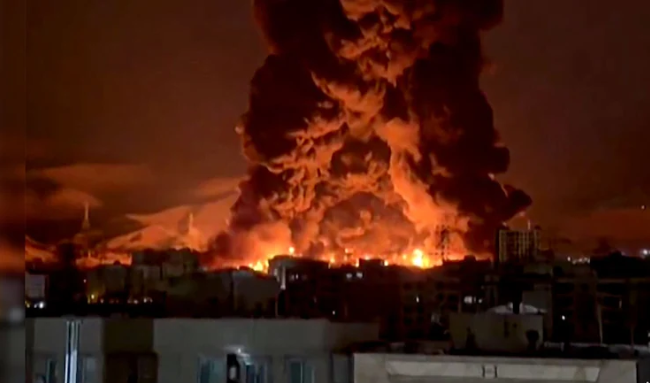
Middle East End War Diplomacy
The ongoing conflict between Iran, the United States, and Israel has taken a new diplomatic turn after Iran outlined three key conditions that could potentially bring the end war. Iranian President Masoud Pezeshkian announced the terms during a statement shared on the social media platform X, emphasizing that Iran remains committed to regional peace but will not compromise on its sovereignty and national rights.
The announcement comes amid escalating tensions in the Middle East, where military strikes, missile exchanges, and economic pressures have intensified the conflict between Iran, the United States, and Israel.
Iran’s Three Conditions for Ending the War
President Masoud Pezeshkian stated that Iran is open to ending the conflict, but only if three critical conditions are met by the United States and Israel.
1. Recognition of Iran’s Legitimate Rights
The first condition outlined by Iran is the recognition of what it calls its “legitimate rights.” Tehran argues that its sovereignty, security concerns, and regional interests must be acknowledged in any peace agreement. Iranian officials have long maintained that foreign military actions against their territory violate international law and national sovereignty.
2. Compensation for War Damages
The second condition demands financial compensation for the destruction caused by the conflict. According to Iranian authorities, recent military strikes have damaged infrastructure, public buildings, and civilian areas in several Iranian cities. Tehran insists that reparations must be paid for these losses before any lasting ceasefire agreement can be finalized.
3. International Guarantees Against Future Attacks
Iran’s third demand is the establishment of strong international guarantees to ensure that similar attacks will not happen again. Iranian leaders argue that without enforceable global commitments, any ceasefire could be temporary and unstable.
President Pezeshkian said these guarantees would be essential for building long-term stability and preventing future military escalation in the region.
Iran Signals Peace While Warning of Escalation
While Iran expressed willingness to end the war under the proposed conditions, its military leadership has also issued strong warnings about possible escalation.
Iranian armed forces spokesperson Abolfazl Shekarchi stated that if Iranian ports or strategic facilities are attacked, Tehran could retaliate by targeting ports and economic centers across the Persian Gulf.
The warning highlights the strategic importance of the Gulf region, which serves as one of the world’s most critical shipping and energy corridors. Any disruption to this area could have serious consequences for global oil markets and international trade routes.
Israel’s Assessment of the Conflict
Meanwhile, officials in Israel have reportedly expressed uncertainty about whether the military campaign against Iran will achieve its long-term strategic goals.
According to reports from international news agencies, Israeli officials have privately acknowledged that there is no clear indication that the conflict will lead to a collapse of Iran’s governing system. Despite ongoing strikes and heavy bombardment, there has been no large-scale internal uprising within Iran.
This suggests that the war may continue for an extended period unless diplomatic efforts gain momentum.
Impact on Iranian Society
The conflict has also had a significant impact on everyday life in Iran. Missile strikes and military operations have damaged homes, infrastructure, and public facilities in several regions.
Civilian casualties and economic pressures have intensified public frustration, though large-scale protests have not emerged during the ongoing conflict. Analysts believe that wartime conditions, security restrictions, and fear of instability may be limiting public demonstrations.
Iran’s economy has already been weakened by years of international sanctions, and the war could further strain the country’s financial stability.
Regional and Global Implications
The Iran–Israel conflict has implications far beyond the Middle East. Escalating tensions between Iran, the United States, and Israel could affect global energy supplies, shipping routes, and international diplomatic relations.
The Persian Gulf region plays a crucial role in global oil transportation, and any disruption could lead to increased fuel prices and supply chain challenges worldwide.
Global leaders and international organizations have urged both sides to pursue diplomatic solutions to prevent further escalation and humanitarian consequences.
Iran’s proposal outlining three conditions to end the war represents a potential opening for diplomatic negotiations. However, whether the United States and Israel will accept or respond to these demands remains uncertain.
For now, the conflict continues to evolve as military operations and diplomatic efforts unfold simultaneously. Analysts warn that without meaningful negotiations, the risk of broader regional escalation could increase.
The coming weeks will likely determine whether Iran’s proposal becomes a starting point for peace talks or simply another chapter in an increasingly complex geopolitical confrontation.
Source: Iran Outlines 3 Conditions To End War With US, Israel
Leave a Reply